
What Probate Covers in Calhoun County
Probate is the court process for settling what a person owned and owed. In Calhoun County, that work belongs to Chancery Court, not Circuit Court. The Eighteenth Chancery District lists "matters testamentary and of administration" among its core duties. The same court hears minor's business and cases involving persons of unsound mind. That ties guardianship and conservatorship to the same bench that probates wills. So when a loved one dies, leaves property, or needs someone to act for them, the file opens in Chancery Court.
The court reviews wills, opens estates, and signs the orders that move property to heirs. It also supervises the people it appoints to manage that property. Mississippi's judiciary describes Chancery Court as the venue for equity, estates, and mental-health matters statewide. Chancellors Larry Little and Robert Q. Whitwell preside over the Eighteenth Chancery District. The Chancery Clerk, Kathy Poynor, keeps the local files and issues certified copies from the Pittsboro courthouse.
Probate touches almost every family at some point. A will, a modest inheritance, or a guardianship for a child can each start here.
Probate Terms Defined
Probate filings use older legal words that confuse many first-time readers. A short glossary makes a Calhoun County estate file far easier to follow. These terms appear across petitions, orders, and the docket itself.
- Testator
- The person who made and signed the will being probated.
- Executor
- The person a will names to carry out its terms and settle the estate.
- Administrator
- The person the court appoints to settle an estate when there is no will or no named executor.
- Intestate
- Dying without a valid will, which sends property to heirs under state law.
- Letters testamentary
- The document the court issues that gives an executor authority to act.
- Guardianship
- Court-authorized care and decision-making for a minor or an incapacitated person.
- Conservatorship
- Court-supervised management of money and property for someone unable to handle their own affairs.
How to Search Calhoun County Probate Records
Calhoun County does not run a free public probate search box. Chancery case files route through the Eighteenth Chancery district's electronic system, which sits behind a login. The county moved onto Mississippi Electronic Courts on March 20, 2023, so newer estates are more likely to be electronic. Older probate files often remain on paper at the clerk's counter. That split means most people reach a probate record through the Chancery Clerk, not a website.
- Confirm the estate was filed in Calhoun County. The decedent's home county usually controls where probate opens.
- For electronic files, open the Eighteenth Chancery MEC portal and sign in with MEC or PAMEC credentials.
- Call or visit the Chancery Clerk to search older estates, request certified copies, or confirm whether a file is electronic or paper.
- Give the clerk the decedent's name, the approximate date of death, and a case number if you have one.
- When online access fails, send a written public-records request to the clerk under the Mississippi Public Records Act.
The login gate uses a small set of fields. The table below shows what the Chancery portal asks for and the details the clerk needs when you search by phone or at the counter.
| Field | Type | Required | Notes |
|---|---|---|---|
| Login | text | Yes | Eighteenth Chancery MEC or PAMEC login. |
| Password | password | Yes | Required for MEC or PAMEC access. |
| client code | text | Optional | Shown on the MEC login screen. |
| Clerk counter or phone request | in person | No formal field | Give decedent name, approximate date of death, case number if known, and the copy type. |
The Eighteenth Chancery District also keeps a public site that explains its work, even though case files stay private. A look at the Eighteenth Chancery case categories shows how probate fits beside divorce, guardianship, and land matters.
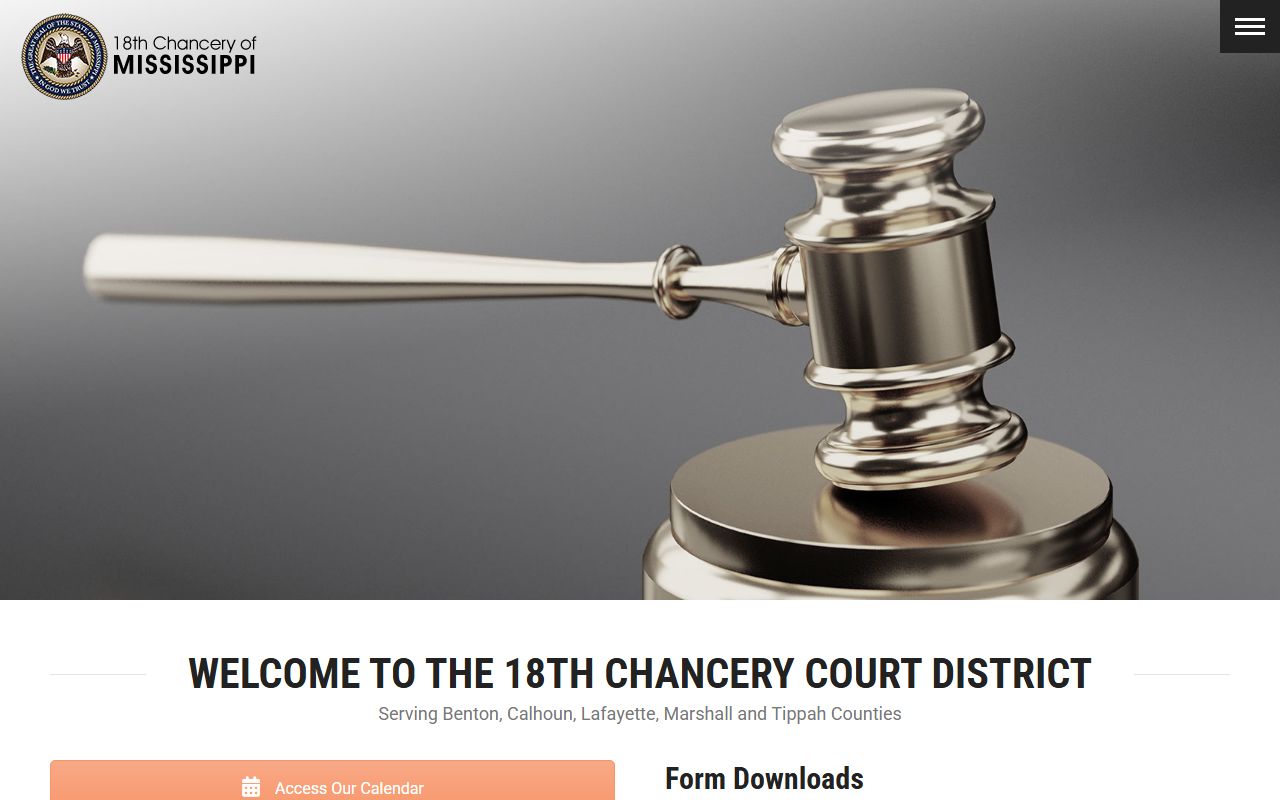
The category list confirms that estates, wills, and minor's business all sit with Chancery Court rather than the Circuit side. That is the single most useful fact for anyone tracing a Calhoun County estate. Note: The MEC helpdesk at 601-576-4650 or helpdesk@mec.ms.gov can answer access questions, but it does not pull case records for the public.
Calhoun County Chancery Court Contacts
Probate runs through one courthouse in Pittsboro, the county seat. The Chancery Court and the Chancery Clerk share the same building at 103 West Main Street. The clerk keeps the estate files, while the chancellors sign the orders. For most readers, the clerk's office is the first call.
The district's Calhoun County Chancery courthouse location page confirms the Pittsboro address used across official sources.
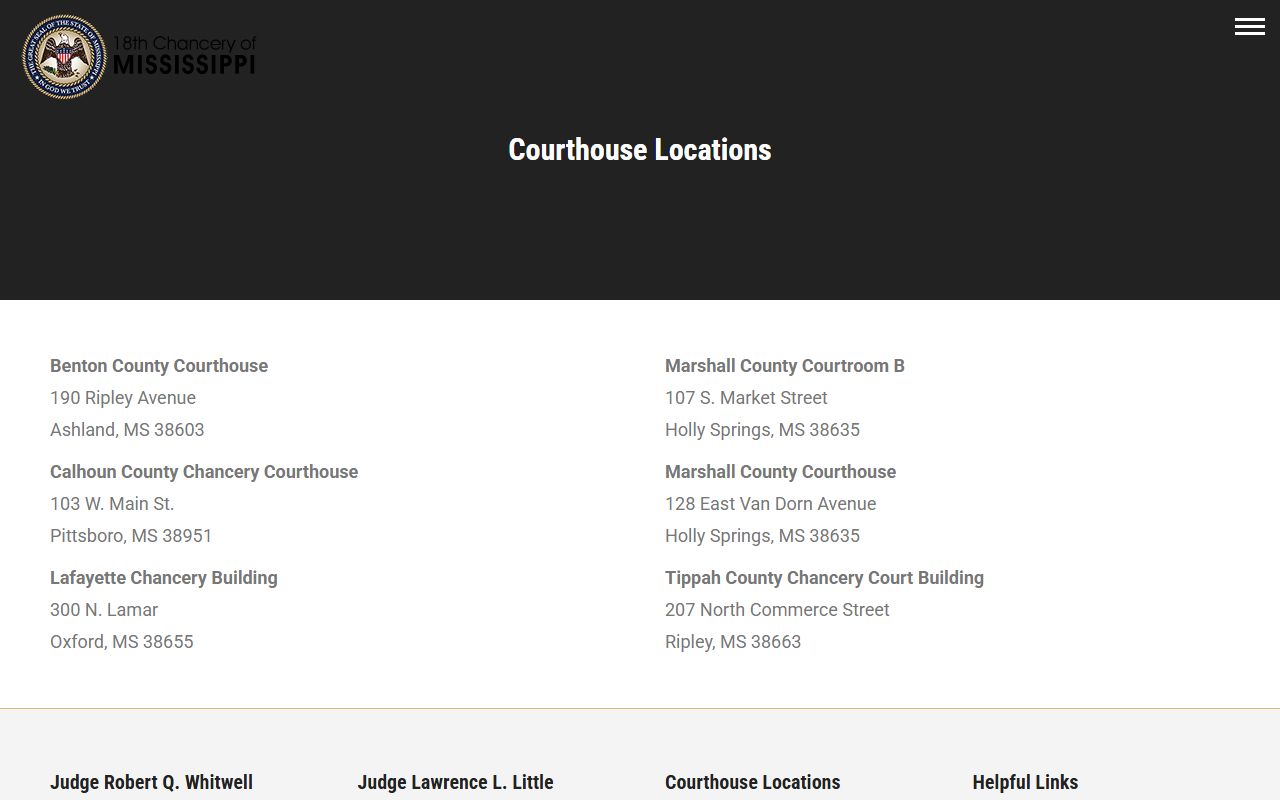
The courthouse listing matches the contact details below, so a visitor or a mailed request reaches the right counter. Use the street address for in-person visits and the clerk's P.O. box for mail.
Calhoun County Chancery Court
103 W. Main Street #192
Pittsboro, MS 38951
662-412-3117
Monday-Friday, 8 a.m.-5 p.m.
Calhoun County Chancery Clerk
Kathy Poynor, P.O. Box 8
Pittsboro, MS 38951
662-412-3117
Monday-Friday, 8 a.m.-5 p.m.
The clerk's fax line is 662-412-3128 for documents that must arrive in writing. A short profile of the office and its duties sits on the Calhoun County Chancery Clerk page.
How Probate Works in Calhoun County
A Calhoun County estate follows a steady path from filing to final order. The route changes with the size of the estate, whether there is a will, and whether minors or contested heirs are involved. The clerk can confirm which papers a given estate needs. Filing fees and local forms were not posted in official online sources, so calling the clerk first prevents wasted trips.
- Confirm the decedent's county and that Calhoun County Chancery Court is the right venue.
- Contact the Chancery Clerk to search for an existing file, request copies, and learn whether the record is electronic or paper.
- For a new estate, decide whether there is a will, who should serve, what property exists, and whether a formal probate or a small-estate route fits.
- File the petition and supporting documents with Chancery Court.
- If appointed, the executor or administrator may receive letters, give creditor notice when required, inventory assets, pay valid claims, and distribute property under court authority.
- Expect extra hearings and orders when the estate involves minors, incapacity, contested heirs, land sales, or out-of-state property.
Each stage produces records the clerk keeps in the estate file. That paper trail is exactly what later searchers pull when they verify an inheritance or a clear title.
Probate Filing Fees in Calhoun County
Probate carries court costs, copy charges, and sometimes publication fees for creditor notice. Official Calhoun County sources did not post a current probate fee list, so the honest answer is to ask the clerk before you pay. The one published number is the service fee charged when copies are bought through the Chancery Clerk's online portal. Confirm every amount with the office, because rates change.
| Item | Amount |
|---|---|
| New estate filing | Not posted; call the Chancery Clerk |
| Certified probate copy | Not posted; call the Chancery Clerk |
| Plain probate copy | Not posted; call the Chancery Clerk |
| Online copy service fee (Chancery portal) | 3.5%, $2.00 minimum, non-refundable |
The 3.5 percent fee, with a $2.00 floor, applies to credit-card copy purchases made through the county's online records system. The portal also states that online copy purchases are final. Note: The online portal serves the land-record index, so probate copies you need certified for court should be confirmed directly with the Chancery Clerk.
Small Estates and Affidavits
Not every Calhoun County estate needs a full probate. Mississippi law allows a successor to collect certain limited personal property by affidavit instead of opening an estate. This route can save time and cost when an estate is small and uncontested. It does not fit every situation, and real property or disputes usually still need court action.
The small-estate affidavit procedure under Miss. Code Ann. Section 91-7-322 lets a successor collect eligible personal property without a formal estate, subject to the statute's limits and waiting period. Confirm eligibility with the clerk or an attorney before relying on it.
When an estate is larger, holds land, or draws a will contest, formal probate in Chancery Court remains the right path. The clerk can point you toward the correct filing, but staff cannot give legal advice.
What Calhoun County Probate Records Show
A probate file gathers the full story of an estate, from the opening petition to the final order. The exact papers depend on whether there was a will and how the estate closed. Many documents are public, while others may be sealed or redacted to protect minors and sensitive financial data. Reading the file in order shows who served, what the estate held, and where the property went.
- Wills, petitions to probate, and petitions for administration
- Orders appointing an executor or administrator, plus oaths
- Letters testamentary or letters of administration
- Inventories, appraisals, creditor notices, and claims
- Accountings, petitions to close, and final distribution orders
Guardianship and conservatorship files add their own papers, such as petitions, bonds, and minor-settlement records. These records often verify an heir, a fiduciary's authority, or a clean chain of title. Divorce and other family files run through the same court, and the Calhoun County marriage and divorce records page covers those separately.
Restricted Calhoun County Probate Records
Not all probate-related files open to the public. Routine estate records may be viewable, but the court shields filings that involve children, capacity, or private medical facts. Guardianship and conservatorship files for minors and incapacitated adults can be sealed or limited. Adoption records, which also run through Chancery Court, are tightly restricted and not part of a public search.
Mississippi's electronic court rules also bar certain personal data from public filings. Social Security numbers, birth dates, minor children's names, financial account numbers, and home addresses may be redacted or kept off the docket. A clerk can release only what the law and any sealing order allow. Note: When a record is restricted, the clerk may confirm a case exists without releasing the sealed contents, so ask what portion is open before requesting copies.